
TimStr
Member-
Content count
230 -
Joined
-
Last visited










-
I1R 2 Pro This is an amazing tiny keychain flashlight! Links: https://www.amazon.de/Taschenlampe-Superhelle-USB-Aufladbare-Schlüsselbund-Taschenlampen/dp/B09L4C6RTH/ref=sr_1_4 https://www.olight.com/store/i1r-2-pro-keychain-light has 2 brightness settings lasts 12h on the lower one charges with usb c waterproof is absolutely tiny and can fit in any pocket, bag or compartment I keep several of them in places I could need them: In my fuse box, in my hiking backpack, in my fanny pack on the keychain. They served me extremely well in the past. Can recommend.
-
Most varieties of white rice are husked, and lack the majority of nutrients that usually concentrate in the outer layer, making it so nutritionally deficient, that the nutrients need to be sprayed back on after the husking process. For instance, white rice that is sold in the US is required to be fortetied with thiamine, niacin, and iron in order to counteract nutrient loss. So if you wanna eat white rice go for the whole grain one. Read about it here: https://en.wikipedia.org/wiki/White_rice#Fortification Besides the benefits of higher fiber, people allready mentioned, brown or dark red rice also provides you with extra antioxidants that are in the color. White rice does not have that. Also: Look into other types of grains and pseudocerials. There are so many healthy and tasty alternatives to rice (like quinoa, millet, shorghum) that you can boil and serve just like rice but that have amazing nutritional content MINUS the issue of arsenic contamination. For instance, quinoa is the only plant that contains a complete protein. Lastly, you can reduce the arsenic level in rice by boiling it with excess water and pouring the water off like pasta. However you will also loose those spayed on vitamins that I mentioned earlier. Here is a risk analysis regarding the arsenic.
-
To me your question sounds very general. Not entirely sure, what you mean by cutting losses. If you're talking about making great descisions, then here are a couple of pointers: 1) Become good at being descisive! Hesitation and going back and forth between strategies are some of the main things that cripple your success. Put bluntly, if you don't make a descision, someone else / life is doing it for you. Here is a video: 2) Be strategic about your work. Spend time making a fool proof and comprehensive plan that you actually trust, once you have one switch to meticulous execution. Don't go back to planning but actually follow through with what you set out to do. Here's a video (actually one of Leos best videos):
-
This looks neat!! I was looking for something like this. Do you have a Firefox extension as well? I don't use Chrome.
-
TimStr replied to TimStr's topic in Spirituality, Consciousness, Awakening, Mysticism, Meditation, God
That right there, just broke my brain for a second!! Of course it's infinity... -- The thing with quantum computing is, that there is no longer any other possible explaination than infinity. -
There is a question with computing that most people don't ask: Where does the computation happen? If you ask this question in regards of quantum computing, the implications are profound. We are using actual infinity to make computation!
-
TimStr replied to eTorro's topic in Spirituality, Consciousness, Awakening, Mysticism, Meditation, God
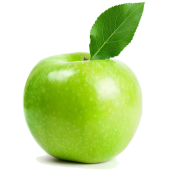
As othet people here said, be sure to rule out the physiological stuff, first. You could have a nutrient deficiency that provokes your body to crave food in order to get that nutrient. If you're not sure about that, do a test with your doctor. Another reason might be the actual food that you eat. You might be on a diet, that just doesn't fill you up, e.g. if you have a lot of food that is very dense in calories. Just picture 1000 calories of butter vs. 1000 calories of brokkoli. You might very well be able to eat that ammount of butter and you won't even be filled, but there is no way to eat 1000 calories of brokkoli without your stomache exploding. So make sure to eat a diet rich in fibre and foods with low calorie density so that your stomache is full after eating and your body makes you feel sated. Edit: I found a picture to illustrate this: -- That out of the way, face your addiction: This is an important insight! Notice what is happening here! You are seperating the action (eating) from the motivation (wanting to eat). As you stop the action, the motivation becomes stronger, as you don't cater to it. But they are still two different things, that need to be tackled seperately. You can stop eating / overeating right away! But you might still be left with suffering the motivation! What is there, that you don't wanna miss out on? Why is it a big deal for you to miss out on it? What if you stop thinking that you will miss out on it? Why do you make yourself suffer with that thought? Confront that! It might not be easy, but you need to see that it's not the actual action of eating that is causing you to suffer but that internal activity that you do to manage how you feel about the action / not doing the action. Get that they are seperate. That's the key to what locks you in your addition! -- Meditation in and of itself might not be useful here, as it does not nessecairly produce that insight. For me the most important change to get a hold of this was this: I stopped doing other things while eating. No watching TV/Youtube. I switched to reading books initially alongside and eventually, I started to have my meals quietly by myself with no other activity, helping me to observe my mind more clearly. With that it was way more easy to actually focus on the food, eat more slowly and take time to enjoy it. And I noticed, as I did that, there is a very distinct point where my body tells me, it's had enough food. So I started to make the rule for myself to take that seriously and never eat any more food after past that point of satiety, even if there was food still left. Only then, I became able to ask: What is it, that I want to get when I continue eating? Why do I create the idea, that I need that? -
Journaling is a kind of writing, that you are doing just for yourself. No need to feel bad about in any way it as long as it serves you! I did tons of journaling ranging from very conceptual self-analysis all to downwright insulting people I was angry at and punching holes into the paper with my pen. Had to get all of that out of my system. So it served me in that way. The only thing I would advise against is sharing journal entrys that you wrote about other people with those people. Especially if you were in an emotionally charged situation. The journal is a snapshot of your emotional state. It can never capture the entirety of your feelings towards a person. So its very easy to hurt people if you shared a snapshot where you expressed yourself in a situation where you were angry.
-
You captured the essence of this beautifully. However most of the other things you wrote are false. You don't have to cater your art to the taste of a specific audience or to whatever kind of standard of professionality. The most interesting breakthroughs in the history of art happend, when people found ways of going against this in an innovative and serious way. Not true, the goal of art is not nessecairly to share it with the general public, except you aim to make lots of money from it. The goal of art is the creation itself and its beauty. Recognition and fame are secondairy. Also improvisation and professionalism do not mutually exclude themselves. There are many accomplished professional improvisers out there.
-
Studying the social behaviours of felines is so fascinating!! It's really giving you a good contrast to what makes up the human mind. I love looking at these: I really love the elegancy with which the serval calmly deescalates the tension, even though he could easily tear the dog into pieces. Look at his body language and facial expression. Here is another one I like: (Note: I advise against keeping big felines as pets, they are not meant to live that way. As far as I know those in the videos were rescued as babys and raised in captivity.)
-
I don't nessecarily want them to just find Absolute Truth, thats nothing I can affect in any way. There was another response by @UnbornTao earlier that relates to this same point, but that got deleted. I don't demand of people, that they just get Absolute Truth, that would essentially require them to get enlightened. I just want to guide to a less sloppy epistemic position. I want them to consider that there could be such a thing as absolute truth. At least open them to that possibility instead of ruling out the existence of truth in the first place. But I see where you guys are pointing to. I cannot convince anybody, even if I want to.
-
I guess, you're right. That's not what I am meaning to do, though. I want to open them up to the possibility, that their relativism and is backwards and incoherent.
-
This is an intresting example. Pattern is a type of qualia, that seems to be on a level, thats neither just subjective nor objective.
-
I see this so much... But many people base a whole bunch of their social justice warrior type of behaviours on that. Trying to make room in society to "take queer/bipoc/non-western... perspective into account". Usually, this becomes really toxic when you add a bunch of group bias on top, or when you get hardcore rightwing / conservatives to parrot this argument for their own case. If I would bluntly tell them, that another perspective has never been poven, all of those people would laugh at me or worse... Solopsism clearly cuts through the chase here, but it's hard to argue for with people that are not truly open. How would go about opening peoples minds to that, when they just seem to be locked into their paradigm.
-
Yeah, get it. So this seems to be the typical fallacy of the postmodern worldview. To put it in my own words: Postmodernism claims, that everything is a relative perspective. Yet it holds this very claim as true / epistemically given and not a perspective. It misses, that relativity is just a relative perspective, too, and in that way overlooks the possibility of the absolute. Yeah, thats what I usually do in most normal conversations. However. at times, I want to make an argument, that requires me to leave that frame and whenever I trie to do that, they usually discredit me arguing in some way with relativity. Besides that, I also want to see this more clearly within my own mind, too.